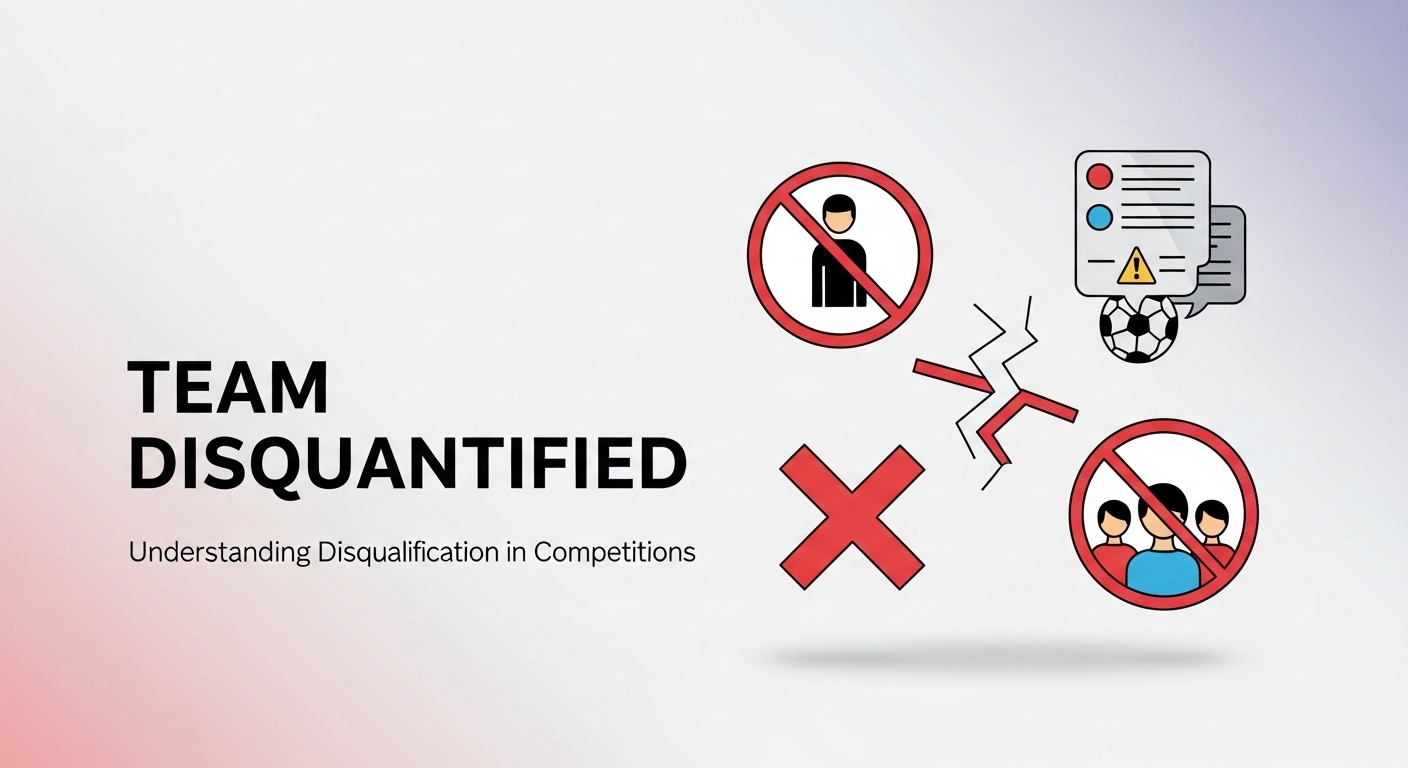
In competitive sports, esports, and professional competitions, fairness and adherence to rules are essential. However, there are situations where a team becomes disqualified, often referred to online or mistakenly written as “team disquantified.” When a team faces disqualification, it can change the outcome of tournaments, affect rankings, and sometimes create controversy among fans and players. Understanding what this term means and how it impacts competitions is important for athletes, organizers, and spectators alike.
A team disqualification does not happen randomly. It usually occurs when rules are broken, eligibility criteria are not met, or serious violations occur during a match or tournament. From traditional sports like football and cricket to modern esports tournaments, governing bodies enforce strict guidelines to ensure fair play. When these guidelines are violated, officials may take disciplinary actions that include warnings, penalties, or complete removal from the competition.
This guide explores the concept of team disquantified or team disqualified, its causes, rules, examples, and how teams can avoid such situations. By the end of this article, you will have a complete understanding of how disqualification works in competitive environments and why it is a critical part of maintaining fairness.
What Does Team Disquantified Mean
The phrase team disquantified is commonly used online as a misspelling or variation of team disqualified. In competitive settings, disqualification means that a team is officially removed from a tournament, match, or event because it violated certain rules or failed to meet specific requirements. Once a team is disqualified, its results are usually canceled, and it may lose its ranking or position in the competition.
Disqualification can occur before, during, or after an event. For example, if a team registers an ineligible player before a tournament starts, organizers may disqualify them before the first match begins. Similarly, if a violation occurs during gameplay—such as unsportsmanlike behavior or cheating—the referees or officials may immediately stop the match and remove the team from the event.
In most organized competitions, the decision to disqualify a team is not taken lightly. Officials typically investigate the situation and review evidence before making the final call. This ensures that the ruling is fair and protects the integrity of the competition. While the term team disquantified may appear in online discussions, the official terminology used in sports regulations is team disqualified.
Why Teams Get Disqualified in Competitions
Teams can be disqualified for several reasons, depending on the type of competition and its governing rules. One of the most common causes is the violation of eligibility rules. Many tournaments have strict requirements regarding player age, nationality, registration deadlines, or team composition. If a team fails to meet these requirements, officials may disqualify them to maintain fairness.
Another major reason is cheating or unfair advantages. In esports, this might involve the use of illegal software, hacks, or unauthorized tools. In traditional sports, it could involve performance-enhancing substances, match-fixing, or manipulation of equipment. Such actions compromise the integrity of the competition and are often punished with immediate disqualification.
Behavior-related violations can also lead to a team being disqualified. Unsportsmanlike conduct, repeated rule violations, or aggressive behavior toward referees and opponents may result in disciplinary action. In many cases, officials issue warnings first. However, severe violations can lead to instant removal from the tournament.
Understanding these causes helps teams stay compliant with rules and avoid situations that could lead to disqualification.
Common Sports Where Team Disqualification Happens
Team disqualification occurs in many different sports and competitive environments. In football tournaments, a team may be disqualified if it fields an ineligible player or violates tournament regulations. Such incidents sometimes change the standings and allow another team to advance in the competition.
In cricket, disqualification can happen due to serious rule violations, misconduct, or administrative errors such as incorrect team registration. Cricket boards and tournament organizers usually investigate such cases carefully because they can affect entire leagues or international competitions.
Esports competitions also experience frequent disqualifications. Since esports rely heavily on technology, issues such as cheating software, server manipulation, or breaking tournament guidelines can lead to teams being removed. As esports grow globally, strict regulations are being implemented to prevent unfair advantages.
The concept of team disqualification is therefore not limited to one type of sport. It is a universal rule enforcement tool used to ensure fair competition across multiple disciplines.
Rules That Lead to Team Disqualification
Every competition has a detailed rulebook that outlines the circumstances under which a team may be disqualified. These rules vary depending on the sport, but most include clear guidelines related to eligibility, conduct, and fairness.
For example, a rulebook might specify that all players must be officially registered before a certain deadline. If a team adds a player after that deadline without approval, it could face disqualification. Similarly, equipment regulations may require teams to use standardized gear or approved software.
Officials enforce these rules to ensure that every team competes under the same conditions. Without strict enforcement, teams might attempt to gain unfair advantages. Disqualification serves as a strong deterrent against such behavior.
Understanding the rules of a competition is essential for teams and coaches. By carefully reviewing the guidelines before participating, teams can reduce the risk of accidental violations that might lead to disqualification.
Differences Between Penalties and Disqualification
Not every rule violation leads to disqualification. In many competitions, officials first impose penalties or warnings. These measures give teams a chance to correct their mistakes before facing harsher consequences.
Penalties may include point deductions, fines, or temporary suspensions. For instance, in some sports, a team may lose points for minor rule violations such as delays or administrative errors. This allows the competition to continue while still enforcing discipline.
Disqualification, on the other hand, is a more severe punishment. It usually occurs when a violation is considered serious or when repeated penalties fail to correct the behavior. Once a team is disqualified, it is removed from the event and may lose any progress it has made.
The difference between penalties and disqualification highlights the importance of maintaining discipline throughout a tournament.
Major Reasons Teams Become Disqualified
Below are some of the most common reasons why teams face disqualification in tournaments and competitions.
Key Causes of Team Disqualification
- Use of cheating software or illegal equipment
- Fielding ineligible or unregistered players
- Violating tournament rules or guidelines
- Match-fixing or betting-related misconduct
- Unsportsmanlike behavior or aggression
- Failure to meet administrative requirements
These issues can damage the reputation of teams and organizations. Therefore, most professional teams invest time and resources in compliance and rule awareness.
Disqualification not only affects the team but also influences the overall competition. When a team is removed, organizers must adjust match schedules, rankings, and sometimes the entire tournament structure.
Impact of Disqualification on Tournament Results
When a team is disqualified, the impact on tournament standings can be significant. Matches played by the disqualified team may be canceled or recorded as losses depending on the rules of the event.
For example, if a team is disqualified early in a tournament, organizers might award wins to the opposing teams. In knockout competitions, the opponent may automatically advance to the next round.
Disqualification can also influence prize distribution and rankings. If a team had already reached a high position before being disqualified, the next eligible team may take its place. This can create unexpected opportunities for other competitors.
Such outcomes demonstrate why tournament rules must clearly define how disqualification affects standings and results.
Examples of Team Disqualification Scenarios
Disqualification scenarios can vary widely across different competitions. One common situation involves an ineligible player. If a player fails to meet age restrictions or registration rules, the entire team may face removal from the tournament.
Another example is rule manipulation during a match. If a team intentionally breaks gameplay rules to gain an advantage, referees may immediately stop the match and declare disqualification.
In esports, software-based cheating is one of the most common causes. Tournament organizers use anti-cheat systems and monitoring tools to detect suspicious behavior. If evidence confirms cheating, the team is removed from the event.
These examples illustrate that disqualification can happen due to both intentional misconduct and administrative mistakes.
Administrative Errors That Cause Disqualification
Not all disqualifications happen because of cheating or misconduct. Sometimes administrative mistakes can lead to serious consequences. For instance, failing to submit team documents or missing registration deadlines may result in disqualification.
Teams are usually required to provide detailed information such as player identification, contracts, and eligibility proof. If these documents are incorrect or incomplete, tournament organizers may disqualify the team to maintain compliance with rules.
Another administrative issue involves roster changes. Many tournaments restrict the number of substitutions allowed during the competition. If a team replaces players without proper approval, it could violate the regulations and face disqualification.
Proper organization and communication are essential for avoiding such mistakes.
Role of Officials and Referees in Disqualification Decisions
Officials and referees play a crucial role in enforcing rules during competitions. Their responsibility is to monitor matches, interpret regulations, and ensure that all teams compete fairly.
When a potential violation occurs, referees usually report it to the tournament committee or governing body. The committee may review video evidence, match reports, and other documentation before making a final decision.
In high-profile competitions, disciplinary panels or ethics committees often handle disqualification cases. These panels provide an additional layer of fairness by carefully evaluating the evidence.
This structured decision-making process ensures that disqualification rulings are not based on personal opinions but on official regulations and verified information.
How Teams Can Avoid Disqualification
Preventing disqualification requires careful preparation and strict adherence to rules. Teams must understand the tournament regulations before participating and ensure that all players meet eligibility requirements.
Training staff and coaches should also educate players about sportsmanship and conduct. Many disqualifications occur due to emotional reactions during matches, which could be avoided through discipline and professionalism.
Another important step is maintaining proper documentation and communication with tournament organizers. Ensuring that player registrations, equipment approvals, and administrative requirements are completed correctly can prevent unnecessary penalties.
Teams that prioritize compliance and preparation are far less likely to face disqualification.
Differences Between Disqualification in Sports and Esports
Although the concept of disqualification exists in both sports and esports, the reasons and enforcement methods can differ. Traditional sports typically focus on physical rules such as equipment standards, player eligibility, and on-field conduct.
Esports, however, often deal with technical issues. Cheating software, server manipulation, and unauthorized tools are common concerns. Tournament organizers rely on advanced monitoring systems to detect such violations.
Despite these differences, the core purpose of disqualification remains the same: protecting the integrity of the competition. Both sports and esports organizations implement strict rules to ensure that all participants compete fairly.
As competitive gaming continues to grow, esports rulebooks are becoming increasingly similar to traditional sports regulations.
Table Showing Types of Disqualification
| Type of Disqualification | Description | Example Situation |
|---|---|---|
| Eligibility Disqualification | Occurs when players do not meet tournament requirements | Using an underage player |
| Conduct Disqualification | Caused by unsportsmanlike behavior or aggression | Fighting with referees |
| Technical Disqualification | Related to equipment or software violations | Using cheat software |
| Administrative Disqualification | Result of paperwork or registration mistakes | Missing roster deadlines |
This table highlights how different categories of disqualification can occur depending on the nature of the violation.
Tournament Rules Example Table
| Rule Category | Requirement | Possible Consequence |
|---|---|---|
| Player Registration | All players must register before deadline | Team removal from tournament |
| Equipment Rules | Only approved equipment allowed | Match forfeiture or disqualification |
| Conduct Rules | Respect officials and opponents | Suspension or disqualification |
| Fair Play | No cheating or manipulation | Immediate disqualification |
These rules illustrate how competitions maintain fairness through strict enforcement.
Future Trends in Competition Rule Enforcement
As technology and global competitions evolve, rule enforcement methods are becoming more advanced. Many tournaments now use video review systems, digital monitoring tools, and data analysis to detect violations.
Artificial intelligence is also being introduced in esports to identify cheating patterns or suspicious gameplay. These systems help organizers make more accurate decisions and reduce human error.
Additionally, transparency is becoming more important. Tournament organizers increasingly publish detailed reports explaining why a team was disqualified. This builds trust among fans and participants.
In the future, stricter regulations and improved technology will likely reduce the number of disqualification incidents.
Conclusion
The concept of team disquantified or team disqualified is an important part of maintaining fairness in competitive environments. Disqualification occurs when a team violates rules, fails to meet eligibility requirements, or engages in behavior that compromises the integrity of the competition.
Although disqualification can be controversial, it plays a vital role in protecting the credibility of tournaments and ensuring that all teams compete under the same standards. From traditional sports to modern esports, strict rule enforcement helps maintain balance and fairness.
By understanding the causes, rules, and consequences of disqualification, teams can better prepare themselves and avoid situations that might jeopardize their participation. Ultimately, respect for rules and sportsmanship remains the foundation of any successful competition.
FAQs
What does team disquantified mean
Team disquantified is usually a misspelling of team disqualified, which means a team has been officially removed from a competition due to rule violations or eligibility issues.
Can a team appeal a disqualification
Yes, many tournaments allow teams to submit an appeal if they believe the decision was incorrect. The appeal is usually reviewed by a disciplinary committee.
Does disqualification cancel previous match results
In many cases, yes. Matches played by a disqualified team may be voided or recorded as losses depending on the tournament rules.
Is disqualification common in esports
Disqualification does occur in esports, especially in cases involving cheating software or rule violations. However, strict monitoring systems help reduce such incidents.
How can teams avoid being disqualified
Teams can avoid disqualification by carefully following tournament rules, ensuring player eligibility, maintaining proper documentation, and demonstrating good sportsmanship.
Stay informed and ahead—visit TopHillSport Com for the latest sports news.