The digital classroom is no longer a concept of the future—it is today’s reality. As schools and institutions rapidly adopt online learning platforms, one name that frequently comes up is schoology alfa. Whether you are a student trying to submit assignments on time, a teacher managing multiple classes, or a parent tracking academic progress, understanding how this platform works can significantly improve the learning experience.
Schoology alfa represents more than just a learning management system. It combines communication, collaboration, assessment tools, and content management into one streamlined digital environment. In this in-depth guide, you’ll discover everything you need to know about its features, login process, benefits, integrations, troubleshooting tips, and best practices for maximizing its potential.
What Is Schoology Alfa and How Does It Work
Schoology alfa is commonly associated with the powerful learning management system developed by Schoology, a platform designed to connect students, teachers, and parents in a centralized digital environment. It enables educators to create courses, distribute assignments, grade submissions, and communicate efficiently—all within a structured online system.
The platform works by organizing content into courses and groups. Teachers upload materials such as documents, videos, quizzes, and discussion prompts. Students log in to view assignments, participate in discussions, and submit their work. Parents can also access their child’s progress, making the system transparent and collaborative. Schoology alfa integrates classroom management with digital tools, allowing institutions to maintain consistent learning experiences both in-person and remotely.
Key Features of Schoology Alfa
Schoology alfa offers a wide range of features that support academic success. At its core, the platform provides course management tools that allow teachers to structure lessons by units, folders, and modules. Assignments can include file uploads, text submissions, quizzes, and multimedia responses, offering flexibility for different learning styles.
Another standout feature is its built-in grading system. Teachers can create customized rubrics, automatically grade quizzes, and provide direct feedback on submissions. The platform also includes a messaging system, announcements, calendars, and discussion boards. These tools foster engagement and make communication between educators and learners seamless.
Here are some of the most important features users benefit from:
- Course and content management
- Assignment and quiz creation
- Integrated grading and analytics
- Parent access and student progress tracking
- Communication tools and discussion forums
Together, these features make schoology alfa a comprehensive solution for digital education management.
How to Access Schoology Alfa Login Portal
Accessing schoology alfa begins with a secure login process. Most schools provide students and staff with unique login credentials, including a username and password. In many cases, institutions use single sign-on systems, allowing users to access the platform through their school’s main portal.
To log in, users typically visit their institution’s dedicated Schoology domain. After entering credentials, they are directed to a personalized dashboard displaying courses, upcoming assignments, recent activity, and notifications. If login issues arise, resetting the password through the school’s IT department is usually the fastest solution.
For parents, access is slightly different. Schools provide a parent access code, which allows guardians to create an account linked to their child’s profile. This ensures privacy while enabling parents to stay informed about grades and deadlines.
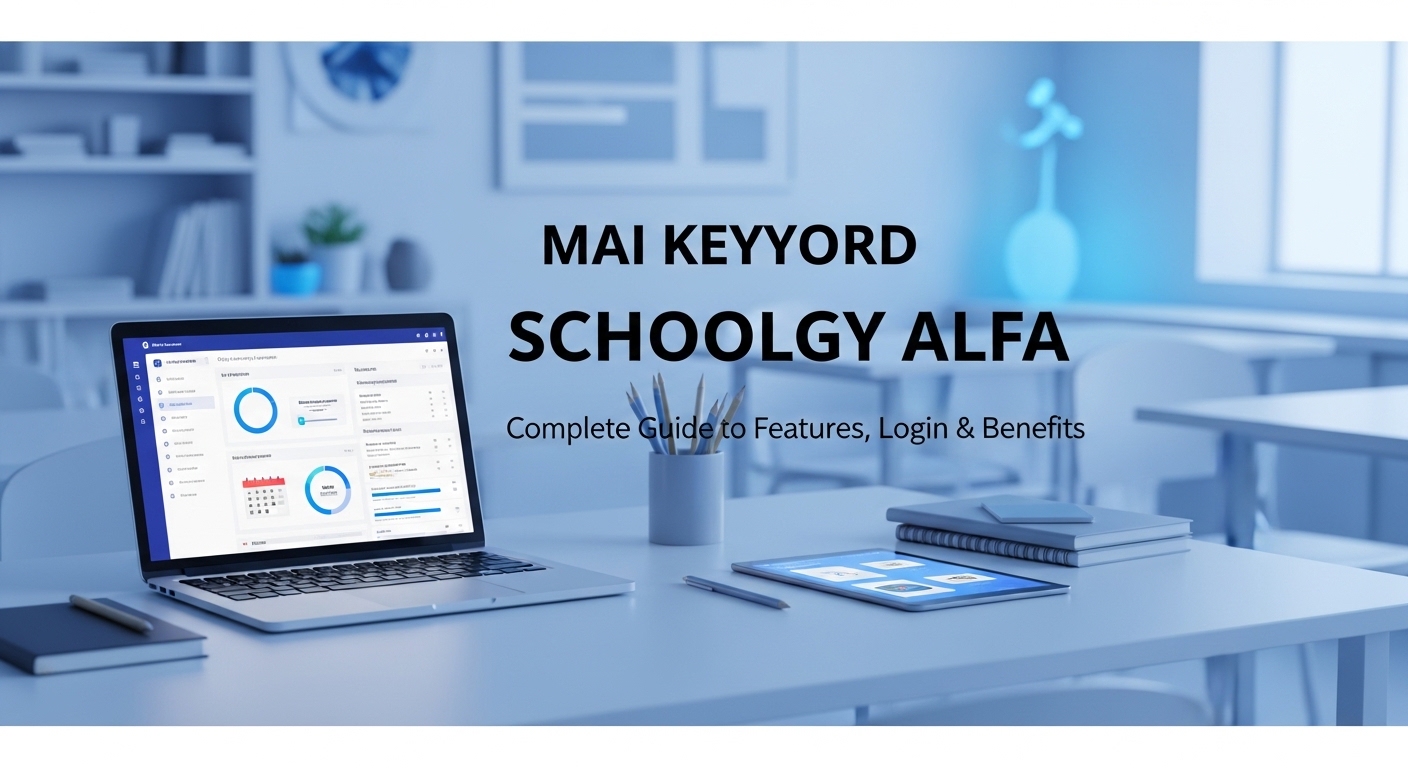
Schoology Alfa Dashboard Overview
The dashboard is the central hub of schoology alfa. Once logged in, users are greeted with a clean interface that displays important updates and quick navigation options. The top menu often includes sections such as Courses, Groups, Resources, and Calendar.
The Recent Activity feed keeps students informed about new announcements, graded assignments, and upcoming due dates. Teachers see additional tools for course creation and analytics. The layout is intuitive, ensuring that even first-time users can navigate without difficulty.
The dashboard also allows customization. Users can rearrange courses, update profile settings, and manage notifications. This personalization improves productivity and ensures that important updates are never missed.
Benefits of Schoology Alfa for Students
For students, schoology alfa simplifies academic organization. Instead of managing paper handouts and multiple communication channels, everything is stored in one digital location. Assignments, deadlines, study materials, and feedback are always accessible.
The platform also promotes independent learning. Students can revisit lesson materials, review teacher comments, and track their progress over time. Built-in discussion boards encourage peer collaboration, making learning interactive rather than isolated.
Additionally, the mobile app allows students to stay connected on the go. Notifications ensure they never miss deadlines, while easy submission tools make it convenient to upload assignments from various devices.
Advantages of Schoology Alfa for Teachers
Teachers benefit significantly from schoology alfa’s course management capabilities. The ability to design structured modules helps maintain consistent lesson planning. Educators can reuse materials, saving time across semesters.
The grading system reduces administrative workload. Automatic quiz grading and integrated rubrics streamline evaluation processes. Teachers can also analyze student performance data to identify trends and provide targeted support.
Communication tools enhance classroom engagement. Teachers can send announcements, host discussions, and provide one-on-one feedback. These features foster a supportive digital learning environment.
Parent Access and Monitoring Features
Schoology alfa recognizes the importance of parental involvement. With dedicated parent accounts, guardians can monitor attendance, assignment completion, and grades in real time.
This transparency strengthens communication between families and schools. Parents can receive notifications about missing assignments or upcoming deadlines. Instead of waiting for report cards, they can actively support their child’s academic journey.
The platform maintains privacy by ensuring parents only access information related to their own child. This secure system balances transparency with data protection.
Schoology Alfa vs Other Learning Management Systems
When comparing schoology alfa to other platforms like Google Classroom, differences become clear. While both systems support assignment distribution and grading, Schoology often provides more advanced analytics and structured course organization.
Another comparison is with platforms powered by PowerSchool. PowerSchool focuses heavily on student information systems, whereas Schoology emphasizes interactive course management and collaboration tools.
The table below highlights key differences:
| Feature | Schoology Alfa | Google Classroom | PowerSchool LMS |
|---|---|---|---|
| Course Structuring | Advanced folders & modules | Basic organization | Moderate |
| Parent Access | Dedicated accounts | Limited | Integrated SIS |
| Analytics | Detailed reports | Basic insights | Comprehensive |
| Communication | Messaging & discussions | Streamlined messaging | Institutional tools |
This comparison helps institutions choose the system that aligns with their educational goals.
Mobile App and Remote Learning Capabilities
Schoology alfa supports remote learning through its mobile application. Available on major operating systems, the app mirrors the desktop experience with optimized navigation for smaller screens.
Students can view assignments, submit work, and participate in discussions directly from their smartphones. Teachers can grade submissions and post announcements without being tied to a desktop computer.
Remote learning tools became especially critical during periods of widespread school closures. Schoology’s infrastructure supports live updates, digital content sharing, and asynchronous learning, ensuring educational continuity.
Assignment Submission and Grading System
Submitting assignments in schoology alfa is straightforward. Teachers set deadlines and define submission formats, such as file uploads or text entries. Students receive instant confirmation once their work is uploaded.
The grading workflow is equally efficient. Teachers can annotate documents, apply rubric criteria, and leave detailed feedback. Students receive notifications when grades are posted, enabling immediate review.
Below is an example of grading components:
| Component | Description | Weight |
|---|---|---|
| Participation | Discussion engagement | 20% |
| Assignments | Homework & projects | 40% |
| Quizzes | Automated assessments | 20% |
| Final Exam | Cumulative test | 20% |
This structured grading model promotes fairness and clarity.
Communication and Collaboration Tools
Communication is central to schoology alfa’s effectiveness. Teachers can post announcements visible to entire classes, ensuring everyone receives important updates simultaneously.
Discussion boards encourage collaborative learning. Students share ideas, ask questions, and engage in peer feedback. This interactive element builds critical thinking and communication skills.
Private messaging further enhances connectivity. Teachers and students can communicate securely without relying on external email platforms.
Integrations and Third-Party Tools
Schoology alfa integrates with numerous educational tools and applications. These integrations allow teachers to embed multimedia content, external quizzes, and digital textbooks seamlessly.
Single sign-on capabilities simplify access across systems. Instead of juggling multiple passwords, users navigate between integrated tools effortlessly. This improves efficiency and reduces technical barriers.
Many institutions also integrate attendance tracking and grade reporting systems, creating a unified digital ecosystem for academic management.
Security and Data Privacy Measures
Data security is a priority in schoology alfa. The platform uses encrypted connections to protect sensitive information. Access controls ensure that only authorized users can view specific data.
Schools manage user accounts centrally, minimizing unauthorized access risks. Parent accounts are restricted to linked student profiles, maintaining privacy boundaries.
Regular updates and compliance with educational data protection standards help ensure that personal information remains secure within the system.
Common Login and Technical Issues
Occasionally, users may encounter login errors or technical glitches. The most common issue involves forgotten passwords. Resetting credentials through the institution’s IT department typically resolves this quickly.
Browser compatibility can also affect performance. Clearing cache or updating browsers often improves functionality. For mobile app issues, reinstalling the app may restore normal operation.
If persistent problems occur, contacting the school’s technical support team ensures timely resolution.
Best Practices for Maximizing Schoology Alfa
To get the most out of schoology alfa, users should maintain organized course structures. Teachers benefit from clearly labeled folders and consistent module layouts. Students should regularly check their dashboard for updates.
Turning on notifications helps prevent missed deadlines. Actively participating in discussions enhances understanding and engagement.
Here are practical best practices:
- Check the calendar daily
- Submit assignments early
- Review feedback carefully
- Keep login credentials secure
- Use the mobile app for quick access
Following these steps ensures a smoother digital learning experience.
Future of Digital Learning with Schoology Alfa
As education continues evolving, platforms like schoology alfa will remain central to academic innovation. Blended learning models, combining classroom instruction with digital tools, are becoming increasingly common.
Artificial intelligence and data analytics may further enhance personalized learning experiences. With continuous updates and integrations, Schoology is well-positioned to adapt to emerging educational needs.
The future of learning is flexible, accessible, and technology-driven. Schoology alfa represents a major step toward that future.
Conclusion
Schoology alfa is more than just an online classroom tool—it is a comprehensive digital learning ecosystem. From structured course management and efficient grading systems to collaborative discussion boards and secure parent access, the platform supports every stakeholder in the educational journey. By understanding its features and applying best practices, students, teachers, and parents can fully leverage its potential for academic success.
FAQs
What is schoology alfa used for?
Schoology alfa is used as a learning management system to organize courses, distribute assignments, manage grades, and facilitate communication between students, teachers, and parents.
How do students log in to schoology alfa?
Students log in using credentials provided by their school, often through a dedicated portal or single sign-on system.
Can parents monitor student progress?
Yes, parents can create linked accounts using a school-provided access code to view assignments, grades, and attendance.
Is schoology alfa suitable for remote learning?
Absolutely. The platform supports online content delivery, assignment submission, grading, and communication, making it ideal for remote and blended learning environments.
Does schoology alfa have a mobile app?
Yes, it offers a mobile application that allows users to access courses, submit assignments, and receive notifications on their smartphones.
Stay on top of sports trends with TopHillSport, your source for fresh insights.